Table of Contents
Faux Finishes: The Art of Handcrafted Lime Plasters in Los Angeles
Faux finishes are decorative paint techniques that simulate the look of natural stone, marble, and wood. When you search for faux finishes los angeles, you discover a refined category of handcrafted lime plasters that elevate interior surfaces far beyond standard paint or wallpaper. These traditional finishes bring texture, depth, and an artisan's touch to Los Angeles homes.
Our artisans in Los Angeles apply these finishes by hand using authentic lime putty and marble dust, layering them to create surfaces with organic movement and soft luster. Venetian plaster, a classic lime-based technique, imparts a polished, marble-like elegance, while microcement offers a seamless, contemporary finish well suited for walls, showers, floors, and countertops. When properly applied and maintained, these surfaces become mildew-resistant and durable, though results may vary based on materials, substrate, and workmanship.
Among our most sought-after handcrafted finishes are Tadelakt plaster and micro cement showers, which we have applied in over 350 Los Angeles projects. These solutions combine beauty with practical performance for wet areas and living spaces alike. We explore the unique qualities of Tadelakt and microcement in greater detail next.
The Distinctive Properties of Tadelakt, Venetian, and Microcement Finishes
When exploring decorative wall finishes, three options stand out for their handcrafted beauty and lasting performance: Tadelakt, Venetian plaster, and microcement. As artisans at Faux Finishes Los Angeles, we work with these authentic materials daily, and we're often asked how they compare--and how they differ from standard faux finishes.
Authentic Lime-Based Plasters: Tadelakt, Venetian, and Microcement
Tadelakt is a centuries-old Moroccan lime plaster that becomes naturally water-resistant when burnished with olive oil soap. Its seamless, stone-like surface makes it a top choice for showers, bathrooms, and wet areas. Venetian plaster, also called marmorino, originated in Italy and combines aged lime putty with fine marble dust. Troweled in multiple thin layers and burnished to a polished sheen, it creates a refined, marble-like finish on interior walls and ceilings. Microcement is a modern cementitious coating that blends fine cements, polymers, and aggregates, applied by hand in thin layers. Its versatility allows it to adhere to most stable substrates, providing a continuous surface for floors, walls, countertops, and showers without grout lines or joints.
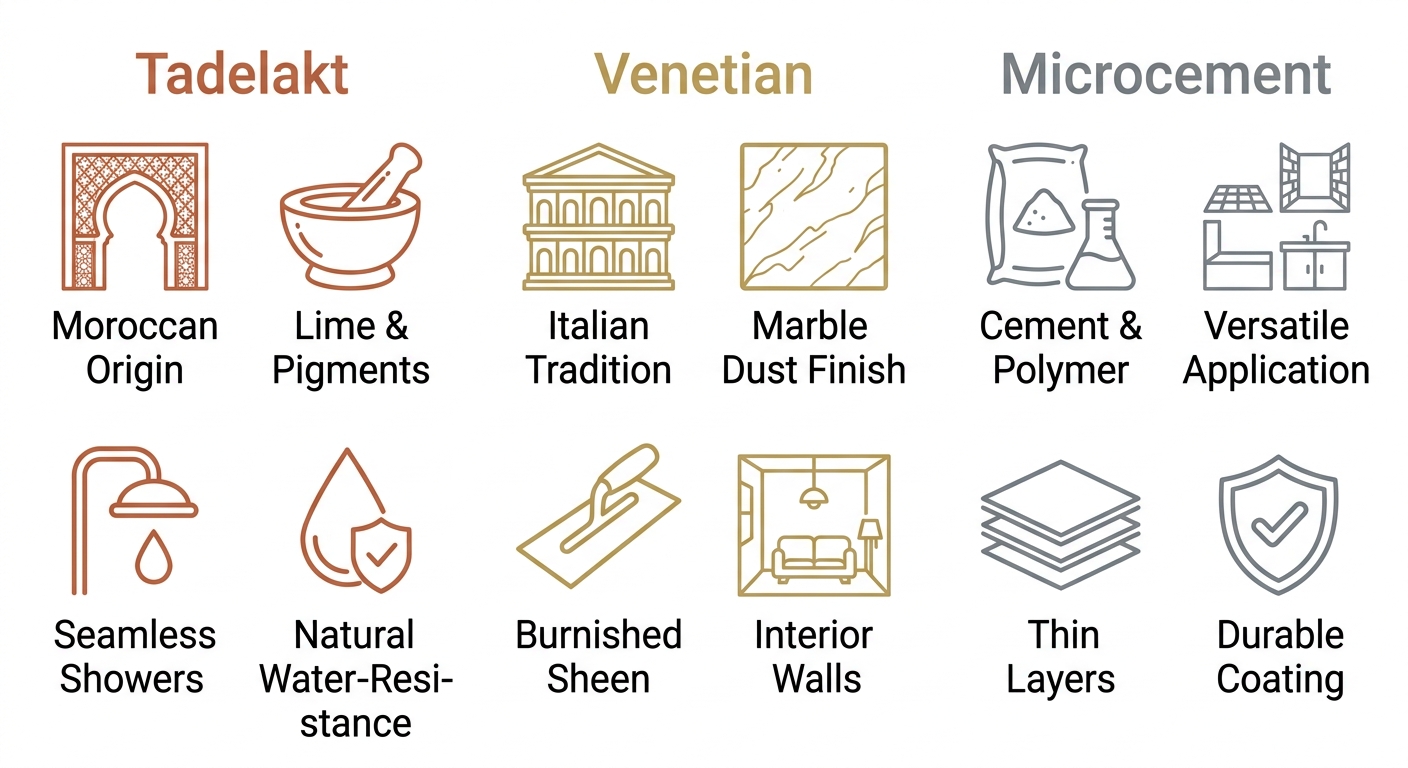
These distinct origins and properties set the stage for understanding how authentic lime plasters compare to common faux finishes--and why that difference is critical for durability and aesthetic depth.
Traditional Faux Finishes vs. Hand-Applied Lime Plasters
Traditional faux finishes rely on synthetic paints and glazes--rag rolling, sponging, or color washing--to mimic the look of texture. While these decorative painting techniques can add visual interest, they lack the substance and breathability of real plaster. Lime-based plasters like Venetian and Tadelakt are composed of natural minerals that undergo carbonation, growing harder and more resilient over time. Faux finishes, typically acrylic or latex, sit on the surface and can peel, trap moisture, and never develop the same depth of color or patina. In our 10 years of experience installing over 350 tadelakt and microcement showers across Los Angeles, we have consistently seen that authentic plasters offer a luminous, tactile quality that synthetic alternatives cannot replicate. Properly applied and sealed, these mineral finishes resist mildew and moisture while allowing walls to breathe, making them a durable and healthier choice for interior spaces.
Material Composition: Lime, Marble Dust, and Synthetic Alternatives
The ingredients behind each finish directly shape its performance. Tadelakt starts with slaked lime, often combined with marble powder or silica, and is colored with natural mineral pigments. The surface is compacted with a stone, then sealed with olive oil soap to create a highly water-resistant finish. Venetian plaster consists of aged lime putty and finely ground marble dust, offering a smooth, low-luster sheen that improves with burnishing. Microcement incorporates portland cement, polymer resins, and mineral aggregates, forming a thin, flexible coating that bonds well to concrete, tile, and even wood. Unlike many synthetic coatings filled with acrylics or vinyls, these lime and cementitious materials are largely mineral-based, low in VOCs, and contribute to healthier indoor air quality. When properly applied and maintained, they provide lasting, highly water-resistant surfaces for residential and commercial projects alike.
As with any handcrafted finish, results may vary based on materials, substrate, and workmanship. Please consult a qualified contractor for specific recommendations. These composition and performance insights lead naturally into the application methods and care required for each plaster type, which we will explore next.
Why Waterproof Plaster Finishes Are Ideal for Los Angeles Homes and Showers
Waterproof Performance for Showers and Bathrooms
Among faux finishes, waterproof plaster finishes such as tadelakt and microcement have become the premier choice for Los Angeles homes, especially in showers where moisture resistance is critical. These materials form a seamless, monolithic surface with no grout lines, dramatically reducing areas where mildew and moisture can penetrate. Tadelakt, a traditional lime-based plaster, becomes highly water-resistant when properly installed and sealed through multi-layer trowel techniques and burnishing. Unlike standard paint, which peels and cracks under sustained humidity, tadelakt showers and micro cement showers create a durable, breathable barrier that performs reliably in wet environments. Our trained artisans have completed over 350 showers in Los Angeles, applying these techniques to produce long-lasting, mildew-resistant finishes. Results may vary based on materials, substrate and workmanship; we recommend an on-site inspection to ensure optimal performance for your space.
Long-Lasting Beauty: Durability Compared to Paint and Standard Finishes
Beyond waterproof performance, durability distinguishes lime-based plasters from conventional finishes. While interior paint may require repainting every two to three years due to moisture damage and wear, properly maintained Venetian plaster and tadelakt finishes can last for decades. This longevity stems from the plaster's chemical bond with the substrate, which resists cracking and peeling far more effectively than synthetic coatings that merely adhere to the surface. In Los Angeles homes, where style meets daily use, choosing waterproof plaster means investing in a finish that ages gracefully and reduces long-term maintenance. As with any custom finish, results depend on substrate preparation and workmanship, so we encourage homeowners to consult a qualified contractor for care recommendations.
Design Flexibility and 2026 Color Trends for Venetian Plaster
Turning to aesthetics, Venetian plaster and related lime finishes offer unparalleled design flexibility, ranging from high-polish marble effects (marmorino) to matte suede, aged rustic patinas, and textured stucco looks. For 2026, trending colors include warm terracotta, earthy ochre, muted sage, deep navy, and soft ivory--all achievable with natural pigments. This versatility allows us to tailor every project to the architectural character of Los Angeles homes, from mid-century modern to Spanish Colonial. By selecting the right finish and hue, homeowners can create a truly custom bathroom environment that stands apart from mass-produced alternatives.
Cost Considerations for Custom Plaster Projects
Finally, understanding the factors that shape pricing helps homeowners plan for a custom plaster project. Total project cost varies based on surface preparation requirements, material grade, design complexity, and square footage. We manage projects ranging from single-feature walls to full shower remodels, tailoring each estimate to the specific scope. Because no two bathrooms are alike, we provide personalized quotes after an on-site consultation. This approach ensures that your investment aligns with your vision while accounting for site-specific conditions. To receive a detailed estimate for your Los Angeles home, please contact us--we recommend obtaining a written estimate and consulting a qualified contractor for final care and maintenance guidance.
Mastering the Application of Tadelakt, Venetian, and Microcement Finishes
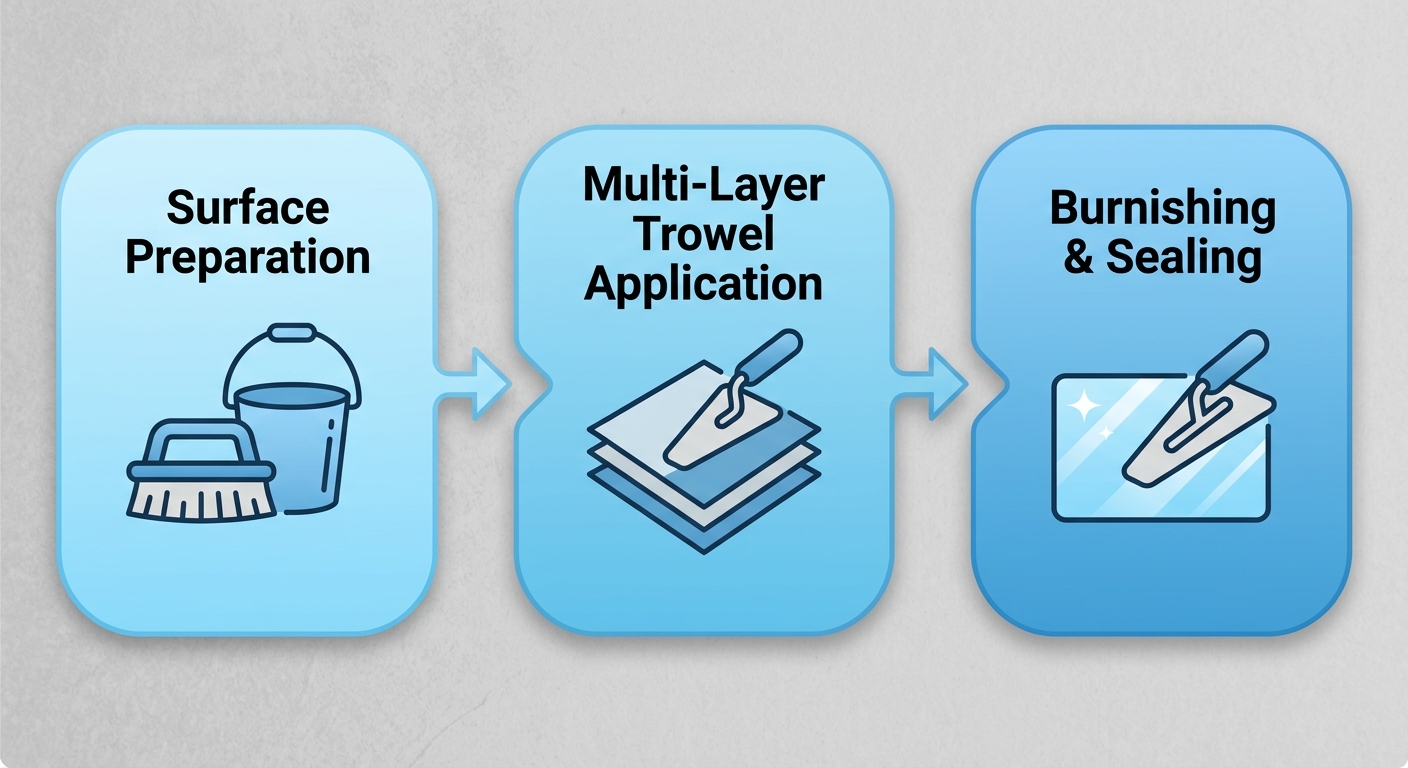
Achieving professional-grade faux finishes that endure in wet environments demands more than aesthetic sense--it requires proven application techniques. Tadelakt, Venetian plaster, and microcement each rely on careful substrate preparation, precise multi-layer troweling, and final burnishing and sealing to produce durable, water-resistant surfaces. Our team at Faux Finishes Los Angeles follows a disciplined workflow that has been refined over a decade and more than 350 completed showers. The three-part process outlined here captures the essential steps we use to deliver high-quality troweled finishes that homeowners and designers trust.
 Three-stage process for professional tadelakt and microcement application
Surface Preparation and Suitable Substrates: Tile, Drywall, and More
All decorative plaster techniques start with a sound, clean substrate. We begin by removing dust, grease, loose particles, and any deteriorating paint. For existing tile, we score the glazed surface and apply a suitable bonding primer: lime-based primer for tadelakt, or an acrylic primer when working with cementitious coatings like microcement. Direct application over ceramic tile is possible, but microcement requires a bonding slurry over glossy surfaces to ensure a mechanical key. When the substrate is painted drywall, we seal the surface with a moisture-resistant primer and evaluate exposure risk; we avoid direct, continuous water contact unless the assembly is fully waterproofed with a membrane system. In every case, we assess the substrate's stability and moisture content before proceeding to the first trowel coat. Thorough preparation minimizes delamination and supports the thin, tightly bonded layers that define these plaster systems.
The Multi-Layer Trowel Technique Step by Step
Once the substrate is primed, we move to the layered trowel application that builds color, depth, and density. We start with a thin scratch coat--about one to two millimeters thick--pressed firmly into the surface with a stainless steel trowel. After the base coat has partially set, we apply the first color coat. With tadelakt, this is a mix of lime putty and marble dust; for Venetian plaster, we use a finely ground marble aggregate to develop a polished, dimensional finish. Each subsequent color coat is kept thin to prevent cracking and allowed to firm before the next pass. As the surface reaches a leather-hard stage, we burnish by compressing the carbonate crystals with the trowel edge, working in tight circular or figure-eight motions. This compression step stops when the surface develops a dense, uniform sheen without pulling material from the wall. The multi-layer approach creates the characteristic depth of authentic lime-based finishes while building the structural integrity needed for wet-area applications.
Burnishing, Sealing, and Final Finishing
Burnishing is performed with a steel trowel rather than a rag; it compacts the lime matrix and develops the natural luster that distinguishes these plasters. Immediately after burnishing tadelakt, while it is still alkaline, we apply olive oil soap (savon noir) with a damp sponge. The soap reacts with the lime to form a breathable, water-resistant layer that remains integral to the finish. For Venetian plaster, we allow the final coat to cure fully and then apply a wax or synthetic sealer that deepens the sheen and adds a protective skin. Microcement surfaces require a polyurethane or epoxy topcoat to achieve water resistance in showers and countertops. Sealing is the step that transforms a decorative coating into a functional, water-shedding surface, but proper technique and substrate compatibility remain critical for long-term performance. Results may vary based on materials and site conditions; for this reason we encourage an on-site inspection and written estimate before relying solely on website descriptions. For older properties, we follow EPA lead-safe work practices and local renovation regulations to ensure a safe, compliant installation.
Best Practices for Long-Lasting Plaster and Microcement Surfaces
At Faux Finishes Los Angeles, our faux finishes expertise developed over a decade of installations across Los Angeles County. Having completed more than 350 showers, we understand what it takes to keep Venetian plaster and microcement surfaces looking their best. Follow our field-tested practices for sealing, crack prevention, and routine care.
Sealing and Protecting Venetian Plaster in Wet Environments
Proper sealing is the foundation of durable Venetian plaster in bathrooms, and it becomes critical in shower surrounds where standing water is common. For such high-moisture areas, we specify Tadelakt plaster--a waterproof plaster that, when burnished, creates a dense, stone-like surface naturally resistant to water. Once the installation has fully cured, our artisans apply a natural wax sealer such as Marseille or Moroccan beeswax with a soft wool pad, working it into the pores to build a breathable barrier. Reapply this sealer every 6 to 12 months, or sooner if water no longer beads. It is vital to avoid silicone-based sealers on Tadelakt plaster; they trap moisture, blocking the material's breathability and risking delamination. Instead, we use microporous sealers designed specifically for lime-based plasters--they permit vapor transmission while repelling liquid water. Following this schedule helps Venetian plaster finishes in wet environments maintain their waterproof properties and subtle luster.
Preventing Cracks in Microcement on Large Surfaces
Microcement creates a seamless look, but large floors and walls need specific anti-crack details. In our Los Angeles work, we embed a fiberglass mesh between each coat to reinforce the slab and distribute tensile forces. Each coat cures at least 24 hours before the next, building strength and reducing shrinkage stress. For floors, we cut control joints every 10 to 12 feet in both directions; these accommodate thermal movement without transferring cracks to the finish. During application, we maintain a consistent wet edge and, in the dry LA climate, we often mist the surface or tent it with plastic to slow drying and prevent surface crazing. These practices significantly reduce the risk of cracking, keeping microcement surfaces visually continuous even on expansive walls and open-plan floors.
Routine Care and Maintenance for Plaster and Microcement Finishes
Daily maintenance for Venetian plaster and microcement finishes is simple but requires the right products. For all surfaces, including micro cement showers, use only a soft microfiber cloth or sponge with a pH-neutral soap--mild dish soap diluted in warm water is effective and safe. Avoid vinegar, bleach, or abrasive cleaners, because they etch the surface and compromise water repellency. Tadelakt countertops and shower benches need wax resealing every 3 to 6 months to sustain their waterproof properties; microcement walls in showers should receive a clear microcement sealer annually after inspecting for wear. Always test any new cleaner on an inconspicuous area first, and follow the manufacturer's guidelines. With consistent care, a waterproof plaster surface can remain beautiful and durable for years.
Please note that results may vary based on materials, substrate and workmanship. For personalized advice, we recommend an on-site inspection. To discuss your project or request a custom quote, contact Faux Finishes Los Angeles. Our team is ready to help you protect your investment in fine plaster finishes.
Elevating Your Los Angeles Space with Handcrafted Decorative Finishes
Handcrafted decorative finishes, commonly referred to as faux finishes, are artisanal plasters made from natural materials like lime putty and marble dust. In Los Angeles, these seamless, custom-applied surfaces transform walls and showers into durable, waterproof works of art that far surpass ordinary paint or tile.
We specialize in faux finishes such as Venetian plaster, tadelakt, and microcement--waterproof, mildew-resistant plasters ideally suited for the humidity and moisture of Los Angeles bathrooms. Our artisans apply every finish by hand, using authentic lime putty and marble dust to achieve custom colors and textures. The burnished tadelakt surface, for instance, develops a stone-like patina that repels water and resists mildew, making it a low-maintenance choice for showers and sinks. Visit our decorative finishes Southwest Florida page for a broader look at our capabilities.
With over 10 years of experience and more than 350 shower installations completed in the area, our trained artisans deliver consistent, durable results. Because each finish is custom-applied, we begin with an on-site consultation to understand your vision and provide a transparent, custom quote. Results may vary based on materials, substrate, and workmanship, but our hands-on approach ensures meticulous attention to detail. Explore our specifically crafted finishes to see how each technique--from Venetian plaster to microcement--can bring your vision to life.
